
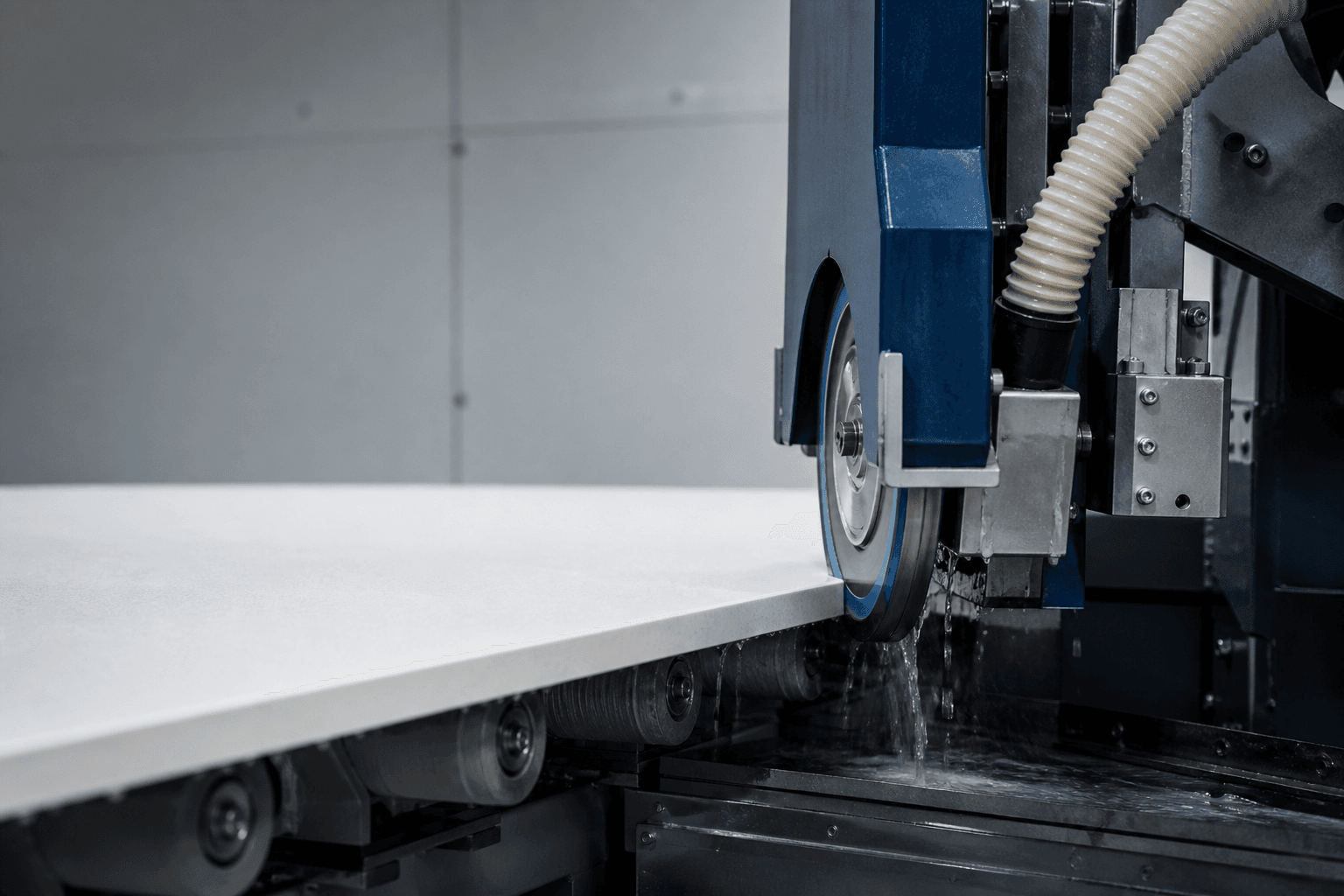
01 / EDGE PROCESSING
Separate initial edge removal from fine grinding and trimming
Initial edge preparation and final edge refinement are different procurement questions. If both stages are required, describe them as a sequence instead of asking for one generic edge wheel to represent the complete process.
A continuous metal-bond squaring wheel and a resin-bond wheel can belong to different positions in the edge-processing route. The exact choice still needs to be reviewed against your material, machine and required edge stage.
- Initial edge preparation or removal
- Fine grinding or edge trimming
- Required final edge condition
- Whether another bevel or profiling process follows
02 / EDGE PROCESSING
State whether the actual process is dry or wet
Dry and wet edge-processing routes should not be treated as interchangeable labels. Confirm which method your line uses and whether the workpiece is ceramic tile or sintered stone before discussing a wheel family.
Tell the supplier which environment is used on the line. If the process setup may change, describe the current and intended conditions separately so the discussion does not assume one method applies to both.
03 / EDGE PROCESSING
Build the enquiry around the machine and finished edge
State whether you use a table-type, semi-automatic or automatic dry edge-grinding machine. Providing the actual machine type keeps the wheel discussion tied to the equipment that will perform the work.
For custom or OEM requirements, share the panel material, process stage, machine and desired downstream edge process. These details allow the configuration to be reviewed around the project rather than around an isolated product name.
- Ceramic tile or sintered stone
- Dry or wet processing route
- Rough or fine edge stage
- Machine type and downstream edge requirement