
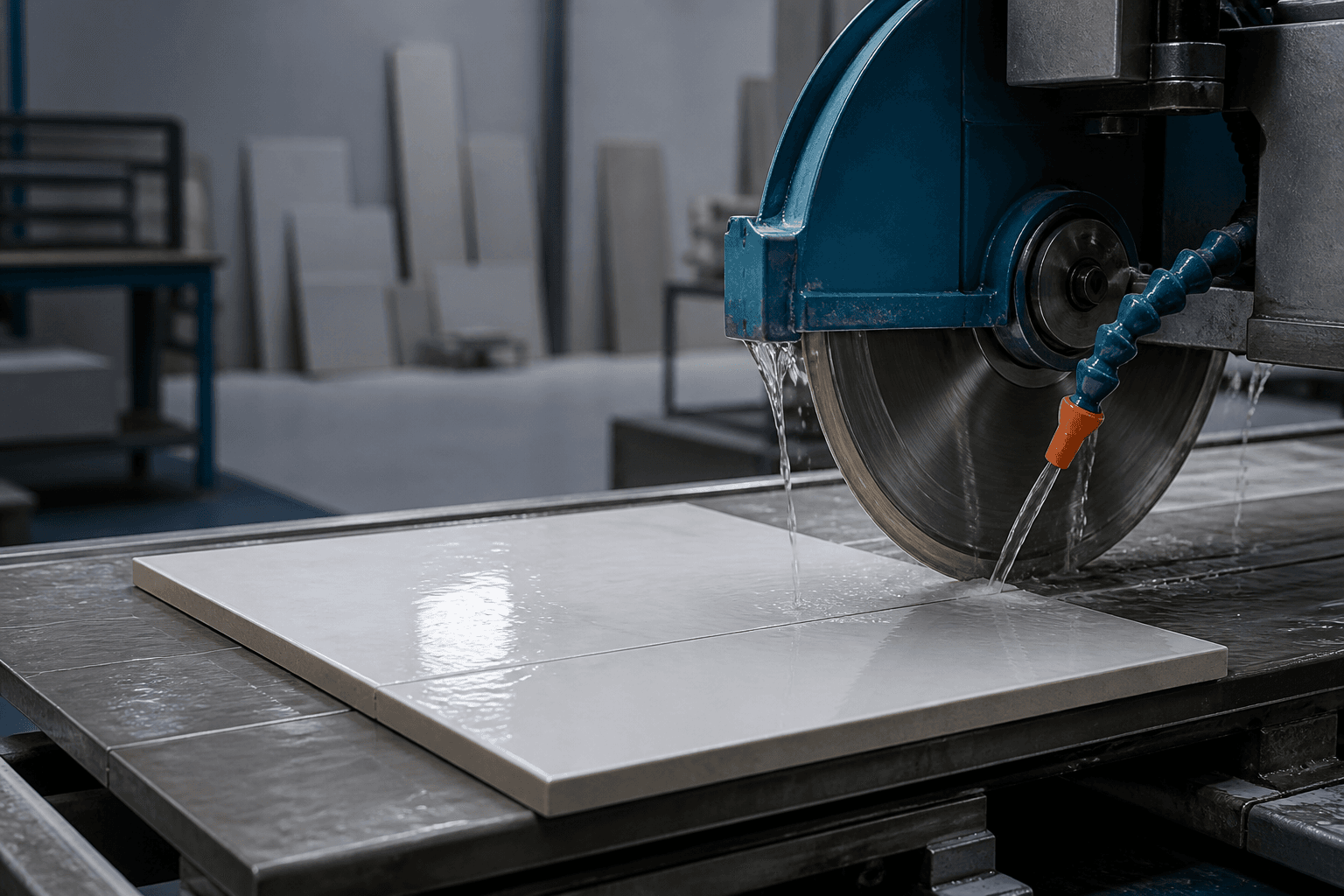
01 / CUT QUALITY
Start with the ceramic material, not a generic blade name
Polished, glazed, antique, vitrified glazed and interior wall tiles are not interchangeable descriptions. Naming the tile body or finish gives the cutting discussion a real material context and helps avoid comparing a series against an undefined ceramic job.
If the exact commercial tile description is not available, share the closest material description, a workpiece image and the visible surface requirement. For a custom or OEM discussion, these details are more useful than starting with a catalogue name alone.
- Tile body or surface finish
- Workpiece image when available
- Whether the finished surface or edge remains visible
02 / CUT QUALITY
Separate the cutting task from the next edge process
A routine straight cut, a trimming step and an edge-preparation cut describe different positions in the fabrication route. If the cut becomes a visible edge, part of a joint or the starting point for grinding or chamfering, state that downstream requirement in the enquiry.
This does not mean one blade name can determine the complete route. It means the cutting requirement can be reviewed with the final edge objective in view, instead of treating the cut as an isolated operation.
03 / CUT QUALITY
Put the cutting machine and required operation in the same brief
State whether the job uses a table-type ceramic cutter, a bridge cutting machine or another setup that needs review. Share the actual equipment type together with the required cut so the discussion remains connected to your production line.
When you request a customized configuration or OEM supply, include any project-specific interface or operating requirement that needs review. Confirm the final recommendation against your actual material, machine and operation.
- Machine type
- Required cut or trimming operation
- Downstream edge requirement
- Custom or OEM requirement, if applicable