
Thin and large-format panels require the operation to be defined before tool selection.
APPLICATION SOLUTION · SINTERED STONE
Sintered Stone Cutting
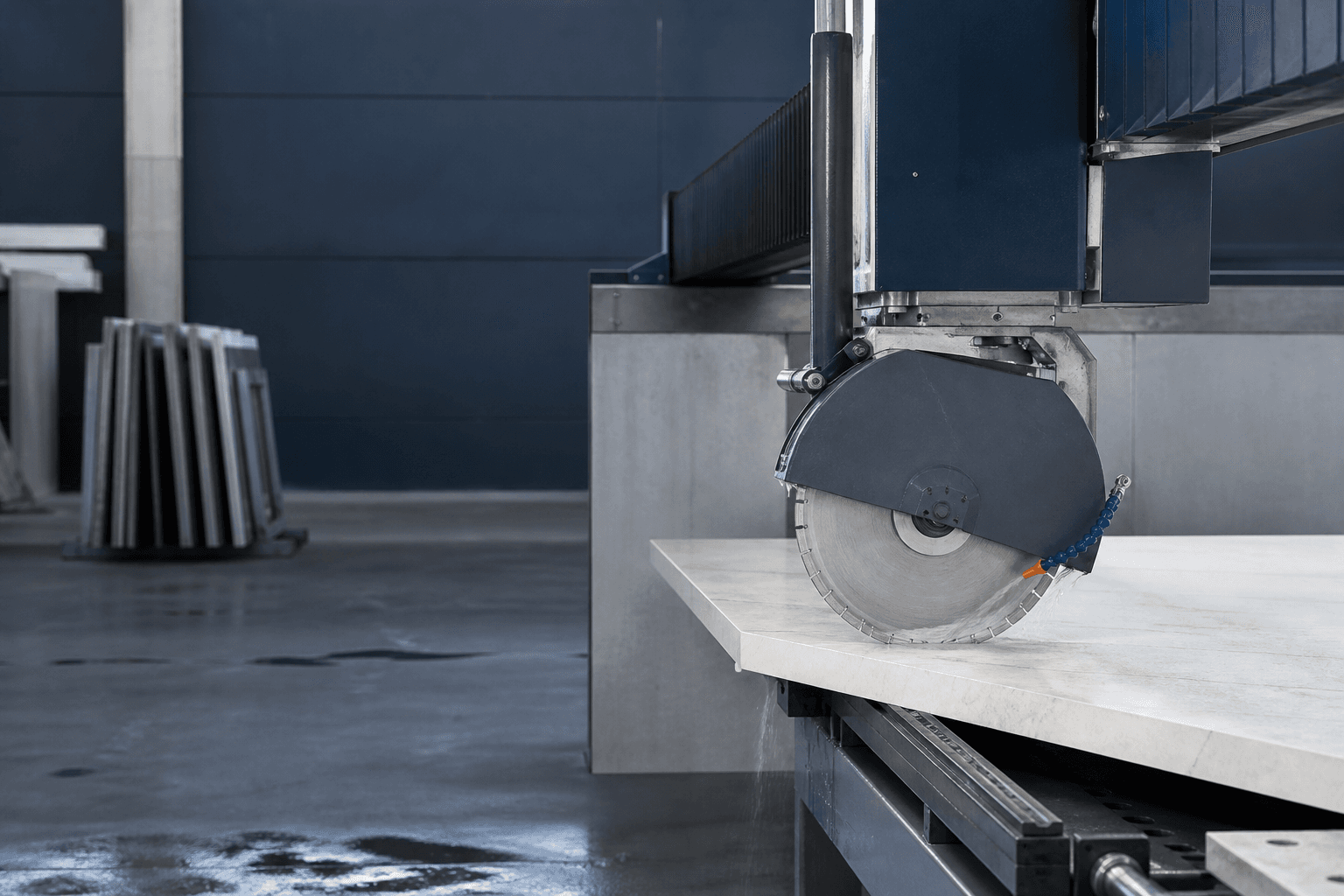
Start with the sintered slab and the cut: straight, 45° bevel or groove. Match the blade and machine setup to the slab thickness and required edge, including any later bevel grinding.
Material scope
Full-body sintered stoneUltra-thin sintered stoneLarge-format sintered stone
Processing focus
Straight cutting45-degree bevel cuttingGrooving
Equipment context
Table-type sintered stone cutterBridge cutting machine
BUYER CONTEXT
Define the cut
before comparing.
For sintered stone, start with the panel type, the exact operation and the cutting machine. If the cut continues into a miter or visible edge, add that next step so the full processing route can be considered.
Straight cutting, bevel cutting and grooving should not be treated as one undefined request.
Machine type helps distinguish the practical route for a product discussion.
PROCESSING ROUTE
Build the selection
around the actual job.
- 01
Define the panel and cut
Separate the panel type and cutting operation before reviewing the blade series.
- 02
Confirm the machine route
Use the actual cutter or bridge-machine setup to frame the discussion.
- 03
Move to the product series
Compare cutting applications and machine requirements on the sintered stone saw blade page.
RECOMMENDED TOOL ROUTE
Tool stages for
this processing job.
Start from the stage you need to complete. The linked product series lets you review the available configurations once the material and machine are confirmed.
What to compare before choosing
| Product series | Selection considerations |
|---|---|
| Sintered Stone (Dekton) Saw Blades | Specify straight cutting, 45° bevel cutting or grooving before choosing the blade. For a miter, include slab thickness and the required joint edge so the blade and subsequent finishing steps can be reviewed together. |
| Sintered Stone Chamfering Wheels | The metal-bond options use the front position and the resin-bond options the rear position. Confirm the 45° beveling setup, 12 mm bore and working section for the selected diameter. |
Sintered Stone (Dekton) Saw Blades
Specify straight cutting, 45° bevel cutting or grooving before choosing the blade. For a miter, include slab thickness and the required joint edge so the blade and subsequent finishing steps can be reviewed together.
View specificationsSintered Stone Chamfering Wheels
The metal-bond options use the front position and the resin-bond options the rear position. Confirm the 45° beveling setup, 12 mm bore and working section for the selected diameter.
View specifications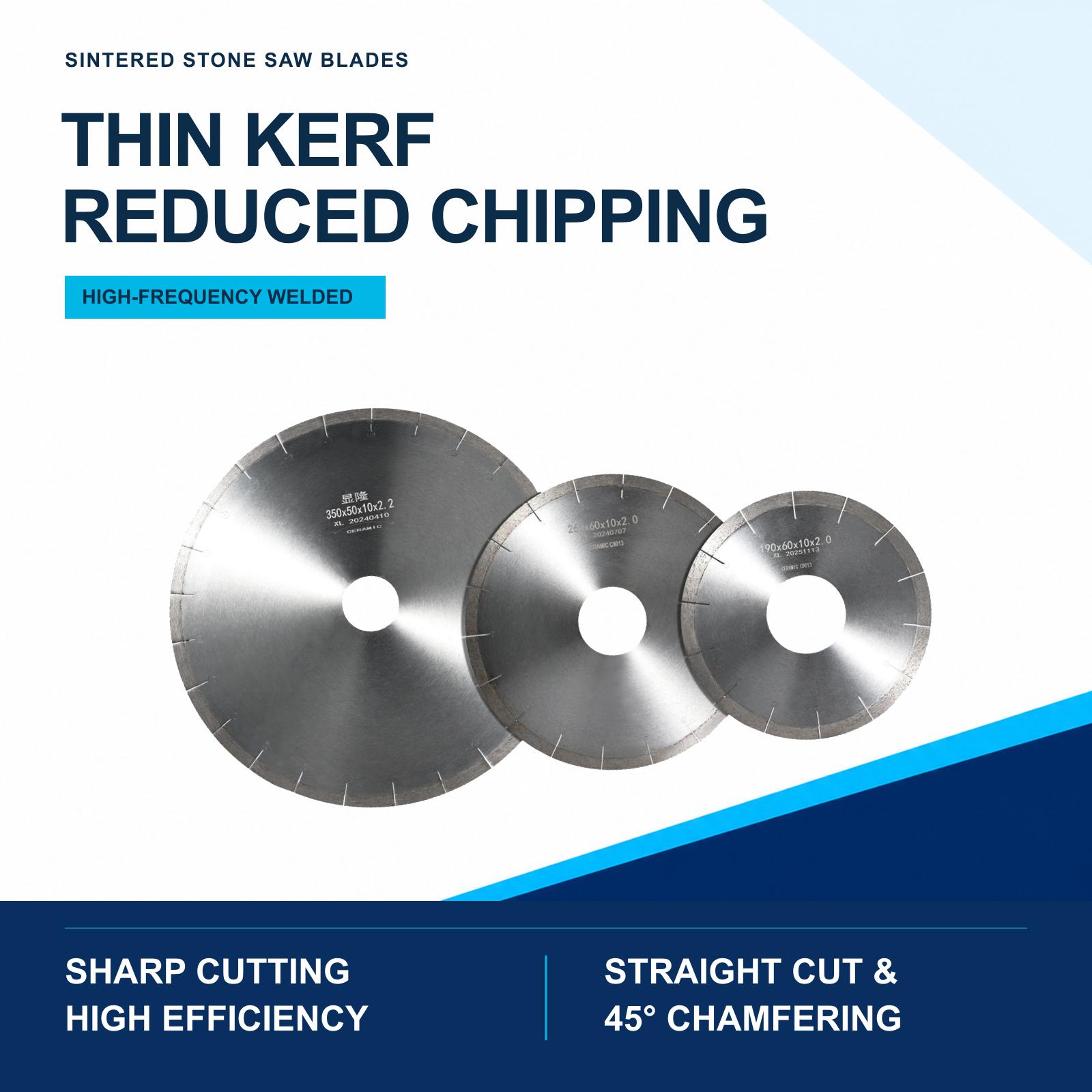
Primary cutting series
Sintered Stone (Dekton) Saw Blades
Sintered stone saw blades for straight cutting, 45-degree bevel cutting and grooving.
View product series ↗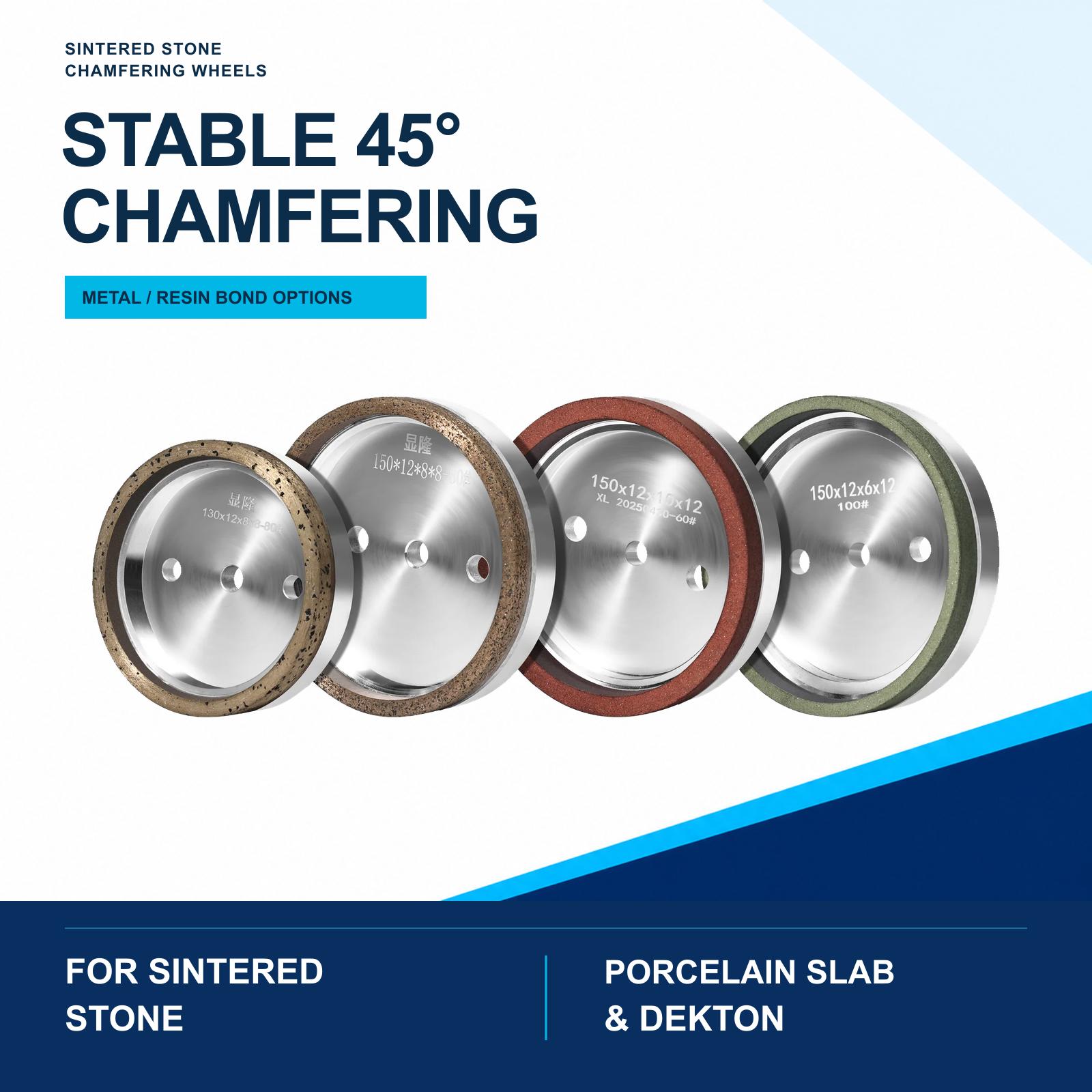
Miter follow-up route
Sintered Stone Chamfering Wheels
For applications that continue from a cut edge to sintered-stone bevel grinding or splicing preparation.
View product series ↗SELECTION LOGIC
Confirm the project
before the quote.
Panel type
Confirm whether the workpiece is full-body, ultra-thin or large-format sintered stone.
Operation
State whether the task is straight cutting, a 45-degree bevel or grooving.
Machine
Share whether the setup is a table-type sintered stone cutter or a bridge cutting machine.
Edge requirement
If the cut will form part of a miter or visible edge, include that downstream requirement in the enquiry.
CUSTOM & OEM PROJECTS
Custom & OEM
support.
Custom and OEM requests can be reviewed around your material, processing operation, machine and project-specific requirements.
01Sintered stone panel type
02Straight, bevel or grooving operation
03Table-type or bridge cutting machine
04Required downstream edge process
APPLICATION FAQ
Buyer FAQs,
answered.
- 01What makes a 45-degree sintered stone cut different from a straight cut?
- They are separate processing operations and should be stated separately in the enquiry. Include whether the cut will continue into an edge, bevel or mitering step.
- 02What should be shared for a thin or large-format panel enquiry?
- Provide the panel type, cutting operation, machine type and required edge result. These details help keep the series discussion tied to the actual fabrication task.