
In this guide 8 sections
Read height, thickness and kerf as different measurements
Segment height describes the cutting section’s radial height; segment thickness describes its width. Kerf is the slot left in the workpiece. These measurements affect different parts of the selection decision. Compare them with diameter, bore, steel-core design and the machine, rather than treating a taller or thinner segment as an automatic improvement.
Four dimensions to read together
01D · Diameter / B · Bore
Diameter must fit the machine and required cut depth. The bore belongs to the approved spindle and mounting arrangement.
02H · Height / T · Thickness
Read the cutting-section dimensions separately from the steel core. Ask for the usable diamond depth when comparing wear capacity.
What each dimension tells you
| Dimension | What it describes | What to confirm |
|---|---|---|
| Outside diameter | Overall blade size | Machine range, clearance and required cutting depth |
| Bore diameter | Centre mounting hole | Approved shaft, flange and adapter arrangement |
| Segment height | Radial height of the cutting section | Usable diamond depth and the manufacturer’s wear limit |
| Segment thickness | Width of the cutting section | Quoted size, application and relationship to the core |
| Core thickness | Width of the supporting steel body | Compatibility with the complete blade design and machine |
| Kerf | Slot produced in the material | Measured result under the actual cutting conditions |
Compare the options Tap to expand
Outside diameter
- What it describes
- Overall blade size
- What to confirm
- Machine range, clearance and required cutting depth
Bore diameter
- What it describes
- Centre mounting hole
- What to confirm
- Approved shaft, flange and adapter arrangement
Segment height
- What it describes
- Radial height of the cutting section
- What to confirm
- Usable diamond depth and the manufacturer’s wear limit
Segment thickness
- What it describes
- Width of the cutting section
- What to confirm
- Quoted size, application and relationship to the core
Core thickness
- What it describes
- Width of the supporting steel body
- What to confirm
- Compatibility with the complete blade design and machine
Kerf
- What it describes
- Slot produced in the material
- What to confirm
- Measured result under the actual cutting conditions
Ask whether a quoted height refers to total segment height or usable diamond-bearing depth. Keep those terms separate when comparing prices and expected wear capacity. Bond, material and operating conditions also affect how that cutting section is consumed.
Why the cut can differ from the nominal thickness
The steel core needs clearance in the slot made by the cutting section. Sideways movement, runout and deflection can change the finished kerf, so measure the result on a representative cut if material yield or slot width matters.
Blade thickness and the finished kerf are separate measurements
01Measure the tool
The cutting section and the steel core have different thicknesses. Quote each value with its name.
02Measure the cut
The kerf is the slot left in the material. Blade movement and setup can change the measured result.
If the core rubs, the blade wanders or the slot is inconsistent, inspect mounting and machine condition before specifying a different thickness. A nominally narrower blade cannot compensate for an unstable process. The runout guide explains the inspection points.
Choose around the production priority
| Production priority | What to review | What not to assume |
|---|---|---|
| Longer useful life | Usable diamond depth, bond, concentration, wear pattern, accepted output | Taller total segment always lasts longer |
| Narrow material loss | Segment/rim thickness, core stability, runout, actual trial kerf | Nominal thickness equals final kerf |
| Straight deep cuts | Core design, tension, flange support, thickness, feed, workholding | A thicker segment alone stops wander |
| Lower-power machine | Approved diameter and thickness, bond sharpness, feed, depth, coolant | The thinnest blade is automatically suitable |
| Clean visible edge | Rim/segment design, diamond/bond system, support, coolant, feed | Thickness alone controls chipping |
| Lowest processing cost | Accepted output, cut time, rejects, blade changes, material yield | Lowest purchase price or tallest segment wins |
Compare the options Tap to expand
Longer useful life
- What to review
- Usable diamond depth, bond, concentration, wear pattern, accepted output
- What not to assume
- Taller total segment always lasts longer
Narrow material loss
- What to review
- Segment/rim thickness, core stability, runout, actual trial kerf
- What not to assume
- Nominal thickness equals final kerf
Straight deep cuts
- What to review
- Core design, tension, flange support, thickness, feed, workholding
- What not to assume
- A thicker segment alone stops wander
Lower-power machine
- What to review
- Approved diameter and thickness, bond sharpness, feed, depth, coolant
- What not to assume
- The thinnest blade is automatically suitable
Clean visible edge
- What to review
- Rim/segment design, diamond/bond system, support, coolant, feed
- What not to assume
- Thickness alone controls chipping
Lowest processing cost
- What to review
- Accepted output, cut time, rejects, blade changes, material yield
- What not to assume
- Lowest purchase price or tallest segment wins
For a narrow strip or visible edge, include the required finished dimension and acceptable edge condition. For a deep cut, include the machine and support arrangement. Those details help the supplier evaluate the core and cutting section together.
Compare actual size combinations
The continuous ceramic, HF ceramic and granite pages list height and thickness against diameter. Read across one complete row when comparing options; a height offered at one diameter does not establish availability at every other diameter.
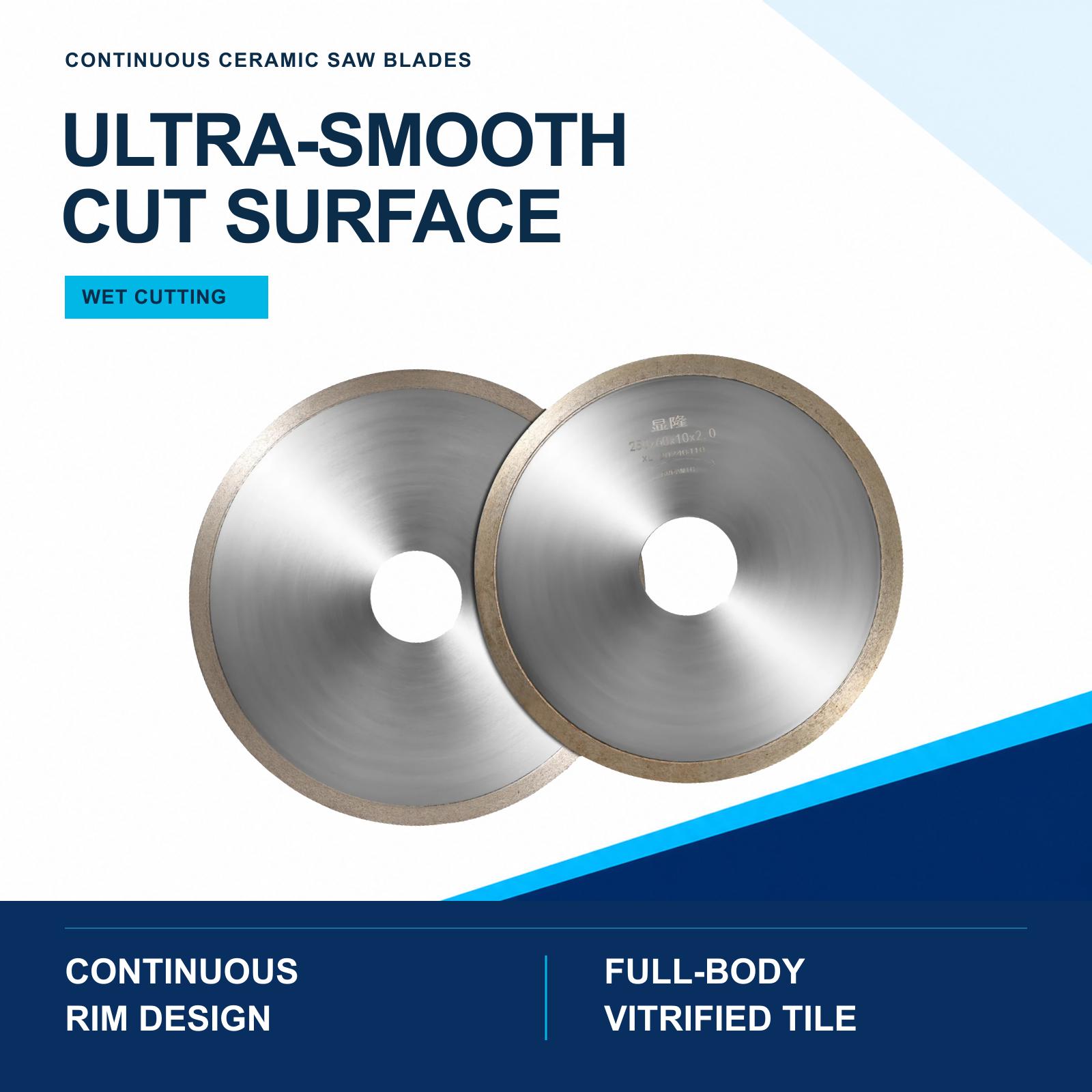
Continuous Ceramic Saw Blades
Consider this continuous-rim series for wet cutting vitrified glazed, interior wall and glazed wall tiles. Confirm the tile body, visible-edge requirement and machine fit before selecting the diameter.
View specifications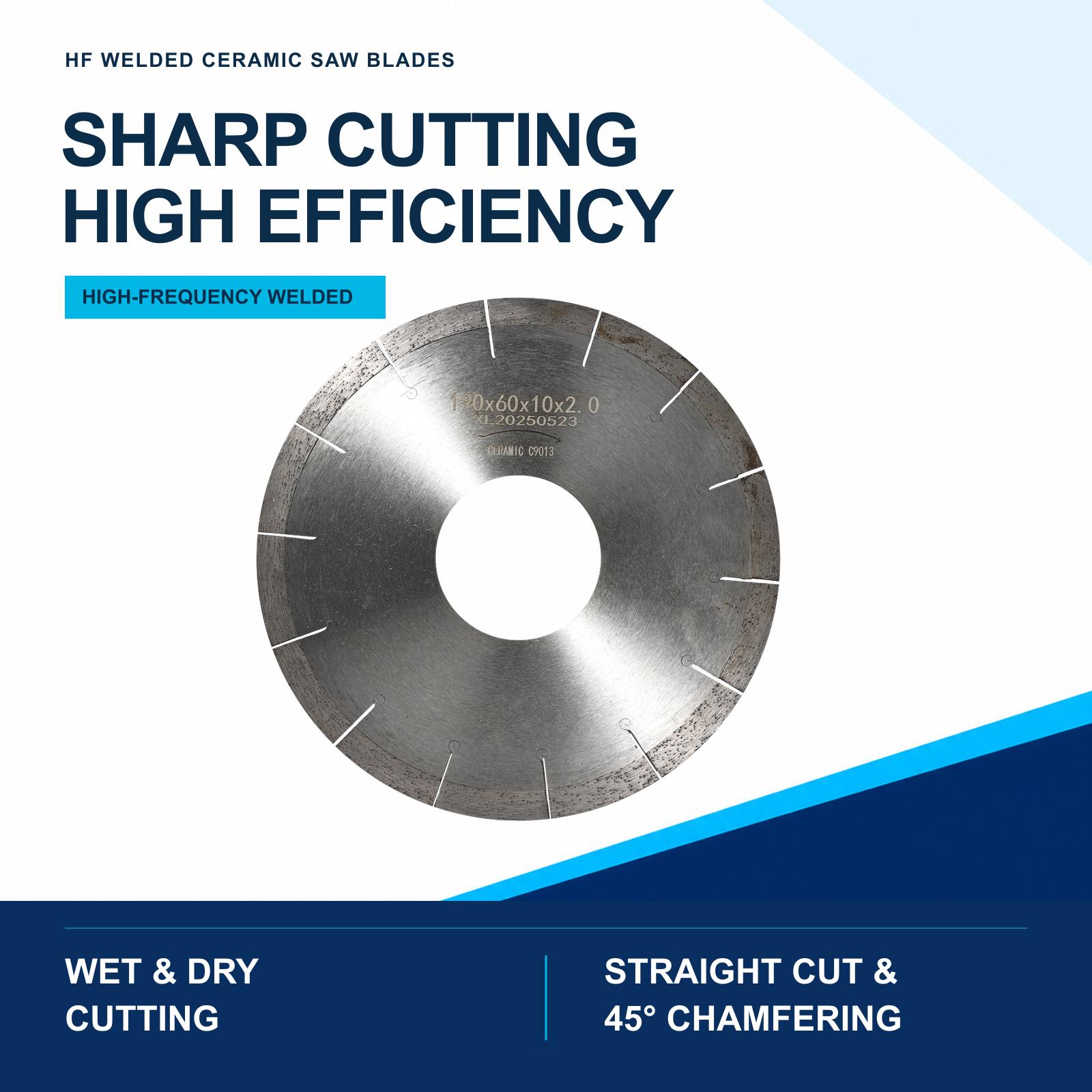
HF Welded Ceramic Saw Blades
Compare this 190–400 mm series for table-type and bridge cutting machines. Match the tile, cut and mounting dimensions; the welding method alone does not determine edge quality or dry-use suitability.
View specifications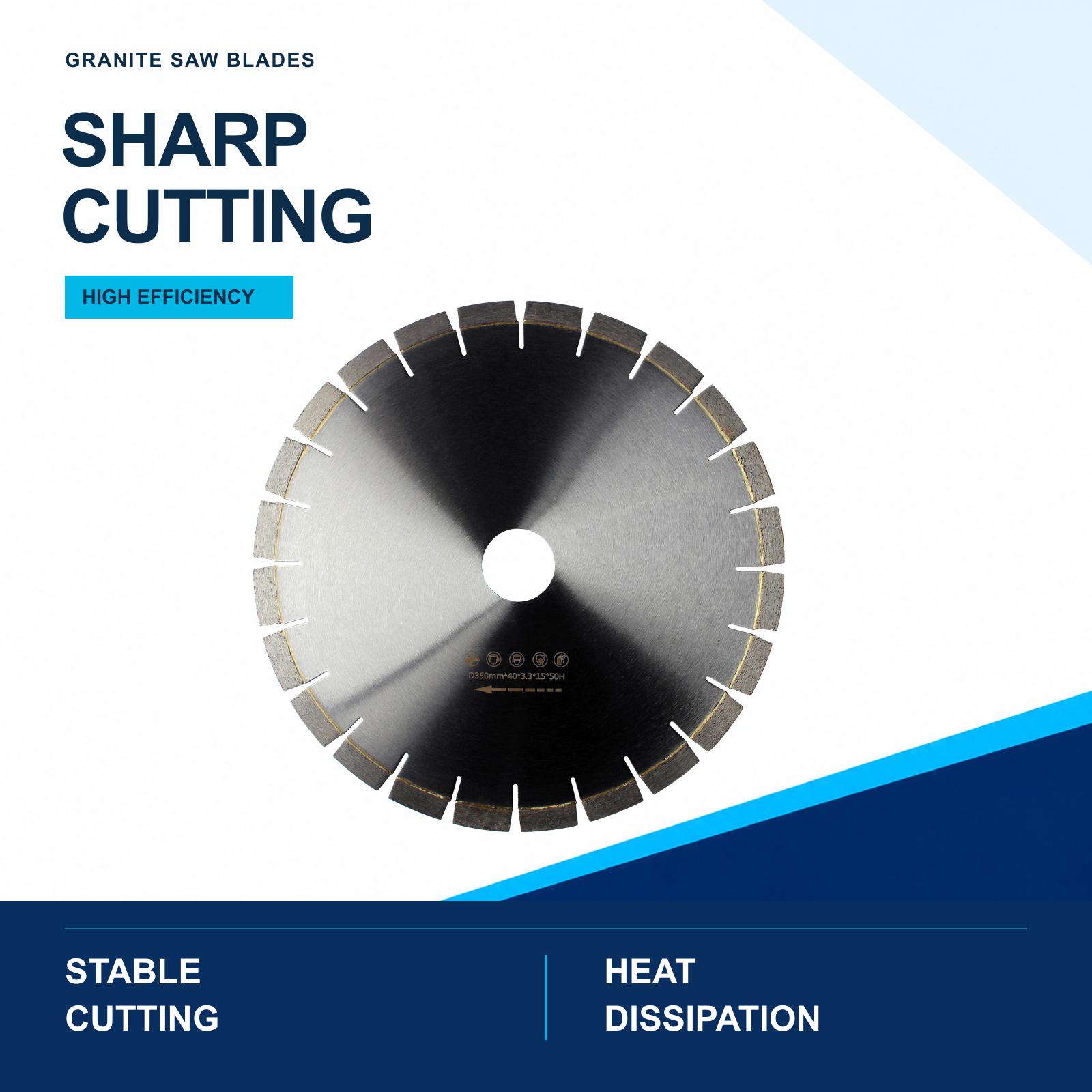
Granite Saw Blades
Use this series for medium-to-high hardness granite and quartzite cutting. Identify the stone and slab thickness, then compare the diameter and cutting-section combination permitted by your machine.
View specificationsSelection example: two 250 mm candidates
The continuous ceramic and HF ceramic tables both include a 250 mm diameter with a 10 mm segment height and a 2.0 mm thickness option. That is a dimensional shortlist. The next questions are material suitability, bore and mounting, operating mode and the required edge.
For a job with a specified slot width, record the measured kerf from the approved setup separately from the nominal 2.0 mm blade thickness. Include both in the purchasing record so the supplier knows whether the number refers to the tool or the finished work.
Build a quotation that can be checked
Write dimensions with their names and units: outside diameter, bore, segment height and segment thickness. Add the material, machine, cut depth and required result. Use the same labelled measurements during receiving inspection and retain the supplier’s complete specification for repeat orders.
Norton’s blade-selection guidance also calls for checking the material application, blade condition and mounting arrangement before use.
FAQ
Does a taller diamond segment always last longer?
No. Usable diamond depth, bond, diamond system, material, machine and operation control the wear result. A taller segment only provides potential wear allowance within a suitable complete design.
Is segment thickness the same as kerf width?
Not necessarily. Runout, deflection, vibration, side wear, material breakout and measurement method can make actual kerf different from nominal segment thickness.
How much wider should the segment be than the steel core?
Use the blade manufacturer’s controlled design and the machine’s limits. Do not apply a universal internet number across diameters and applications.
Which dimension matters most for edge quality?
No single dimension controls the edge. Rim/segment design, bond, diamond grit, runout, coolant, feed, workholding and material must be evaluated together.