
In this guide 7 sections
Choose an approved process before choosing the blade
Use wet cutting when the blade, machine and material instructions require water. Dry cutting needs a blade explicitly rated for it, a compatible machine and appropriate dust controls. Decide from the exact product rating and task; a segmented appearance does not establish dry-use suitability.
Both routes need the correct blade and controls
01Wet cutting
Use the specified water delivery. Maintain hoses, nozzles, filters and slurry handling.
02Approved dry cutting
Use a dry-rated blade, the specified dust controls and the manufacturer’s duty cycle.
Compare the working arrangements
| Check | Wet cutting | Approved dry cutting |
|---|---|---|
| Blade and machine | Rated for the wet process and specified water delivery | Blade explicitly dry-rated; machine and duty cycle compatible |
| Heat and debris | Maintain water at the working area and remove slurry | Follow cooling intervals and the prescribed extraction arrangement |
| Workplace | Manage water, slurry, electrical compatibility and cleanup | Manage dust capture, filtration and exposure controls |
| Material | Follow the slab or tile processing instructions | Confirm that the material and task permit this method |
| Selection evidence | Complete blade specification and a representative cut | Complete blade specification and a representative cut |
Compare the options Tap to expand
Blade and machine
- Wet cutting
- Rated for the wet process and specified water delivery
- Approved dry cutting
- Blade explicitly dry-rated; machine and duty cycle compatible
Heat and debris
- Wet cutting
- Maintain water at the working area and remove slurry
- Approved dry cutting
- Follow cooling intervals and the prescribed extraction arrangement
Workplace
- Wet cutting
- Manage water, slurry, electrical compatibility and cleanup
- Approved dry cutting
- Manage dust capture, filtration and exposure controls
Material
- Wet cutting
- Follow the slab or tile processing instructions
- Approved dry cutting
- Confirm that the material and task permit this method
Selection evidence
- Wet cutting
- Complete blade specification and a representative cut
- Approved dry cutting
- Complete blade specification and a representative cut
A water tray and a functioning pump do not prove effective delivery. Equally, a vacuum hose does not prove that a dry process is adequately controlled. Inspect the complete arrangement for the task.
Follow the water to the cutting area
Look beyond the blade
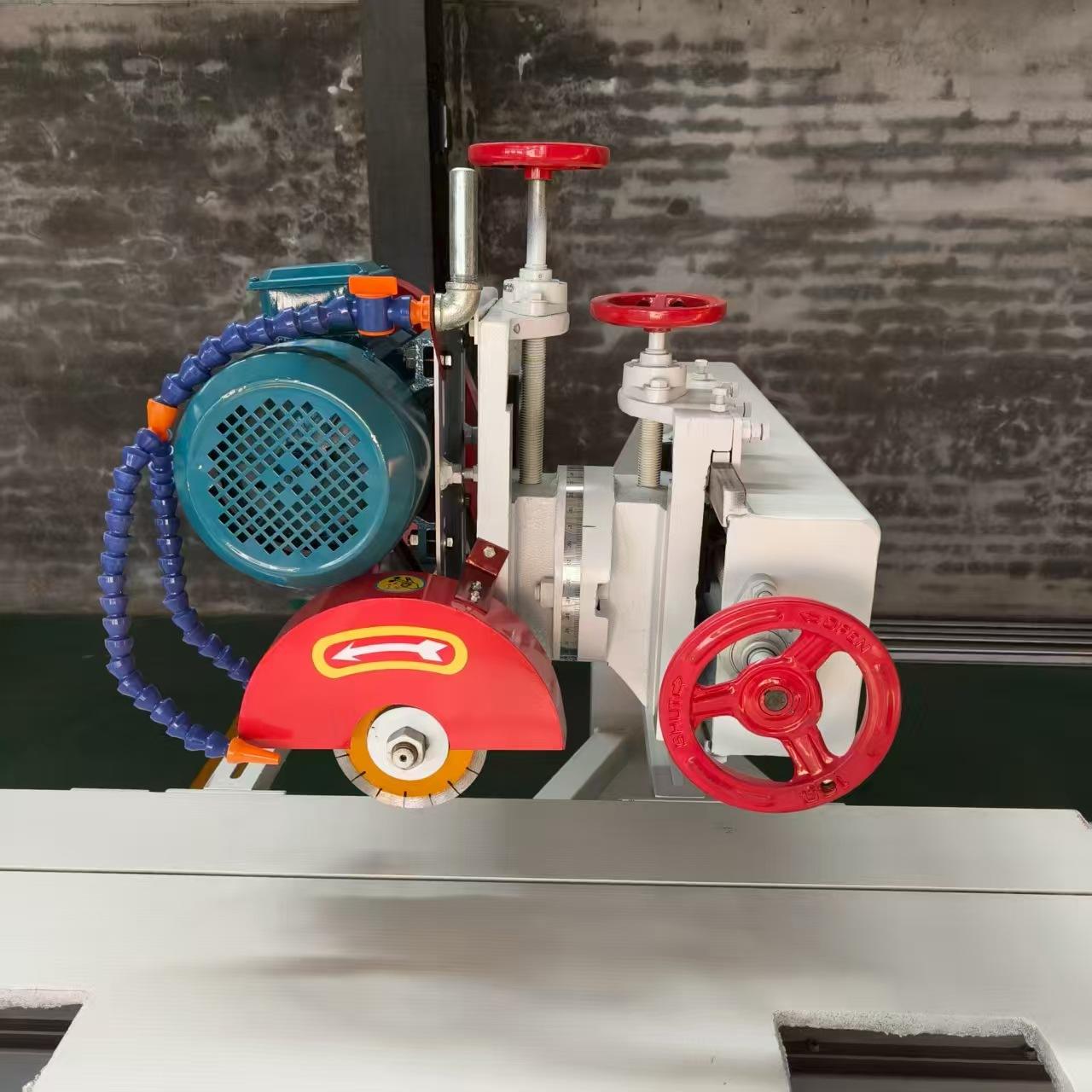
01Inspect the cutting head
Photograph the guard, coolant outlet and mounting area so the supplier can understand the setup.
02Follow the water to the cut
Check nozzle direction and uninterrupted delivery, then inspect filters and slurry removal.
Check hoses, nozzle direction, flow and filters. Keep slurry from obstructing delivery or building up around the cut. OSHA’s stationary masonry saw guidance describes continuous water delivery and maintenance of hoses, nozzles and filters for that equipment category.
The required flow comes from the blade and equipment instructions. More water is not a substitute for correct direction, a sound blade and stable work support. Use the machine’s approved electrical protection and wet-use arrangement.
Check dry-use approval explicitly
Ask for the operating instructions for the exact blade and machine. Confirm the material, cut depth, permitted duty and dust-control system. Do not run a wet-only blade dry; Husqvarna’s selection guidance makes that distinction explicitly.
Silica-containing materials require effective exposure controls under the rules for your location. Water can reduce dust, but wet cutting does not remove every exposure concern. NIOSH’s safe-work guidance describes layered controls and maintaining water and ventilation systems.
Match the blade to the material as well as the method
Ceramic wall tile, dense porcelain, engineered quartz and natural stone should not be grouped into one cutting request. Include the actual product, thickness and required edge. For a visible glazed surface, inspect both the top edge and underside of a representative cut.
The continuous ceramic and HF ceramic pages below provide different size combinations. Compare the relevant series and confirm the wet/dry rating for the selected item before placing an order.
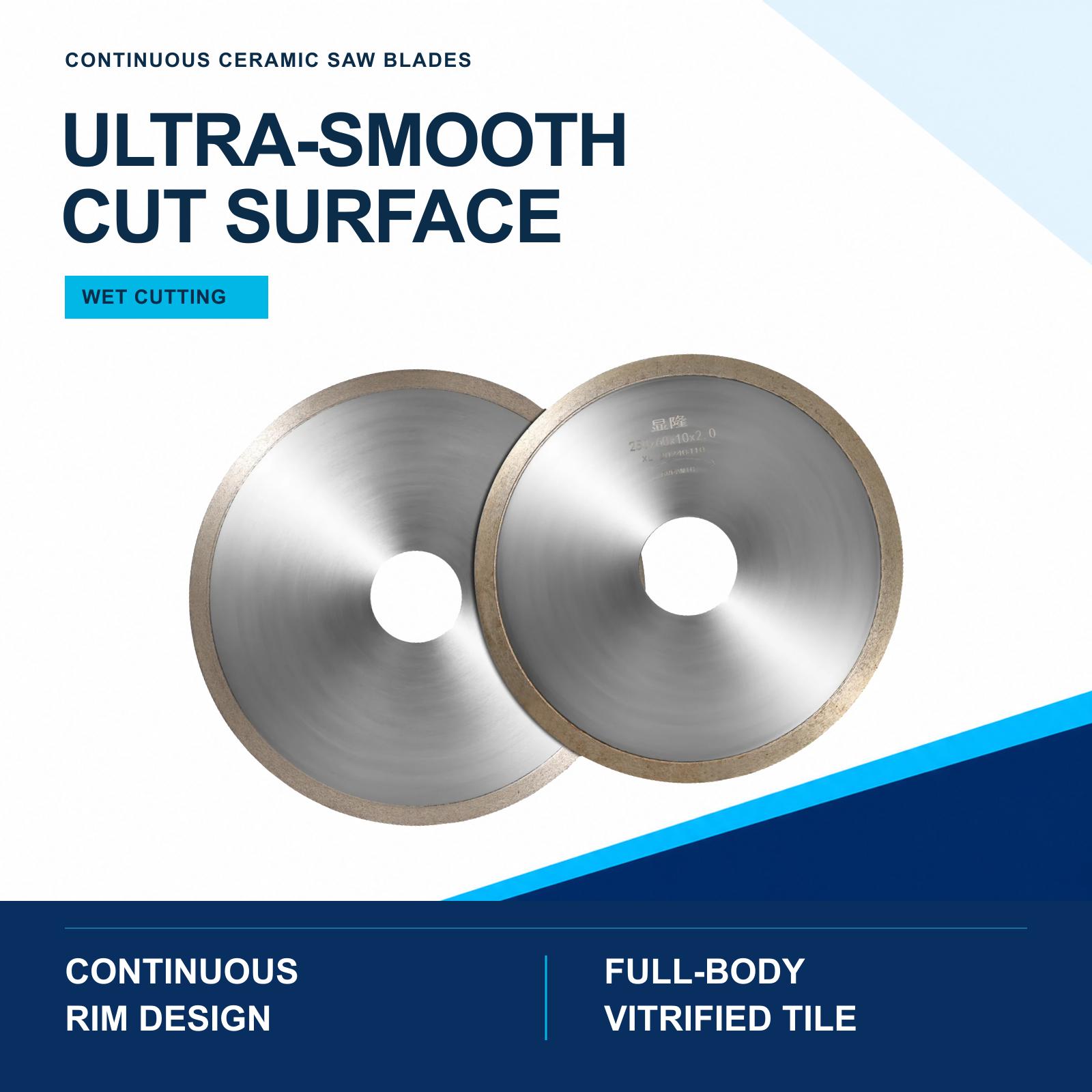
Continuous Ceramic Saw Blades
Consider this continuous-rim series for wet cutting vitrified glazed, interior wall and glazed wall tiles. Confirm the tile body, visible-edge requirement and machine fit before selecting the diameter.
View specifications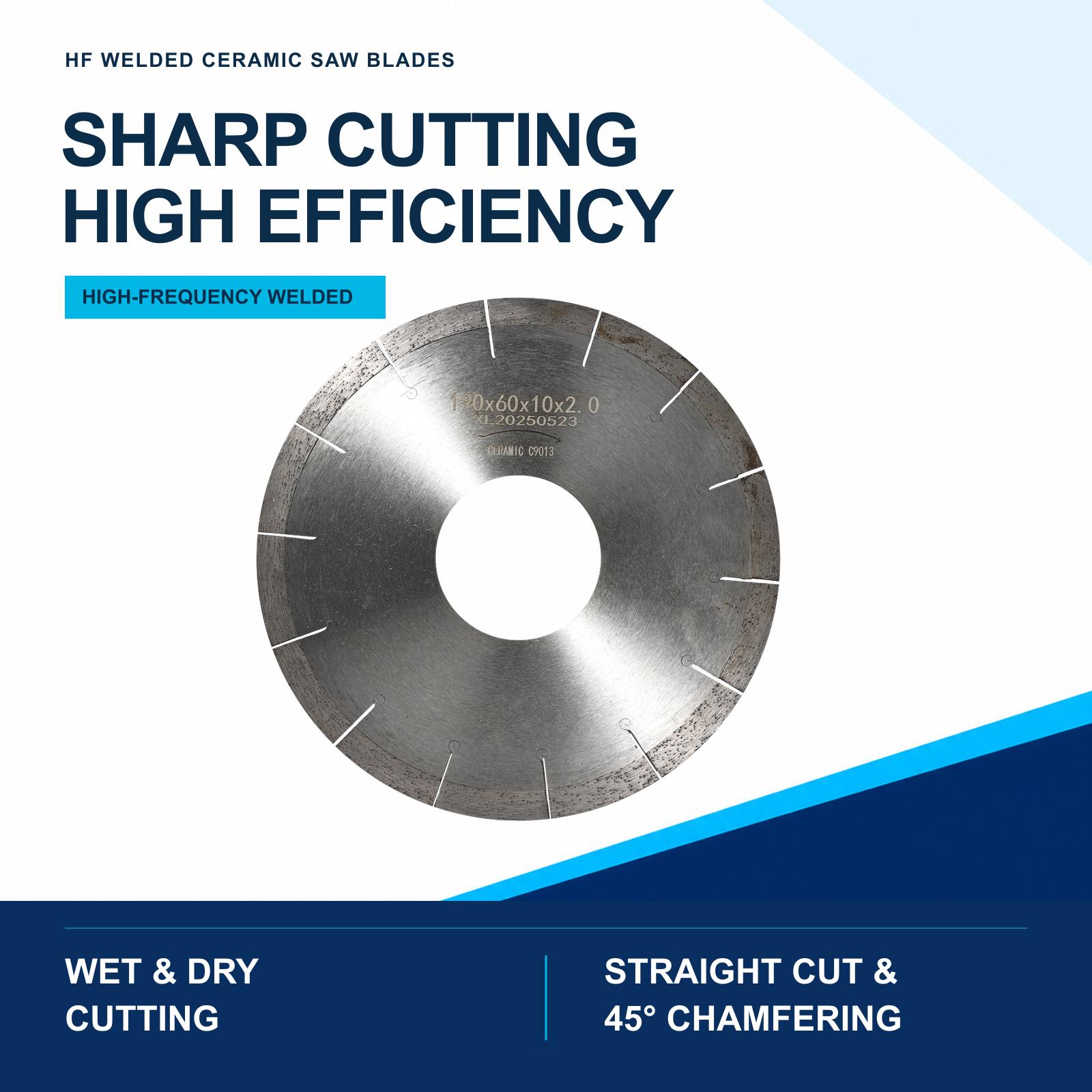
HF Welded Ceramic Saw Blades
Compare this 190–400 mm series for table-type and bridge cutting machines. Match the tile, cut and mounting dimensions; the welding method alone does not determine edge quality or dry-use suitability.
View specificationsSelection example: a site without a water supply
The absence of water does not make an existing wet blade suitable for dry work. First determine whether the material and task permit a dry process. Then confirm a dry-rated blade, compatible equipment and the required dust controls. If those conditions cannot be met, arrange an approved wet setup or a different work method.
When comparing feasible options, include setup, extraction or slurry handling, accepted edge quality and cleanup in the cost. Send the supplier the site constraints along with the tool dimensions so the discussion covers the complete job.
FAQ
Is wet cutting always better for a diamond blade?
No. It is often beneficial for sustained tile and stone cutting when blade and machine are wet-rated, but the correct process depends on the approved equipment, material, quality target, site and controls.
Can I use a wet diamond blade without water for a short cut?
No, not unless the blade manufacturer explicitly rates that blade for dry use and the machine and controls also permit it. “Only one cut” does not change a wet-only rating.
Does wet cutting eliminate silica dust risk?
No. It can suppress dust effectively, but mist, incomplete water coverage, cleanup and residual material can still create exposure. Follow the task-specific risk assessment and local requirements.
Which is cheaper: wet or dry cutting?
Calculate cost per accepted output. Include tool wear, rejected material, cycle time, water/slurry or extraction maintenance, setup, cleanup and changeovers. The lower blade price does not necessarily create the lower production cost.