
In this guide 7 sections
Start with the slab and its processing instructions
For engineered quartz, select a blade intended for the exact slab material and machine, provide the specified cooling and support, and use the slab manufacturer’s cutting procedure. Set feed and speed from the approved tool and equipment instructions. A sample cut should establish the acceptable edge before a valuable slab enters production.
Look beyond the blade
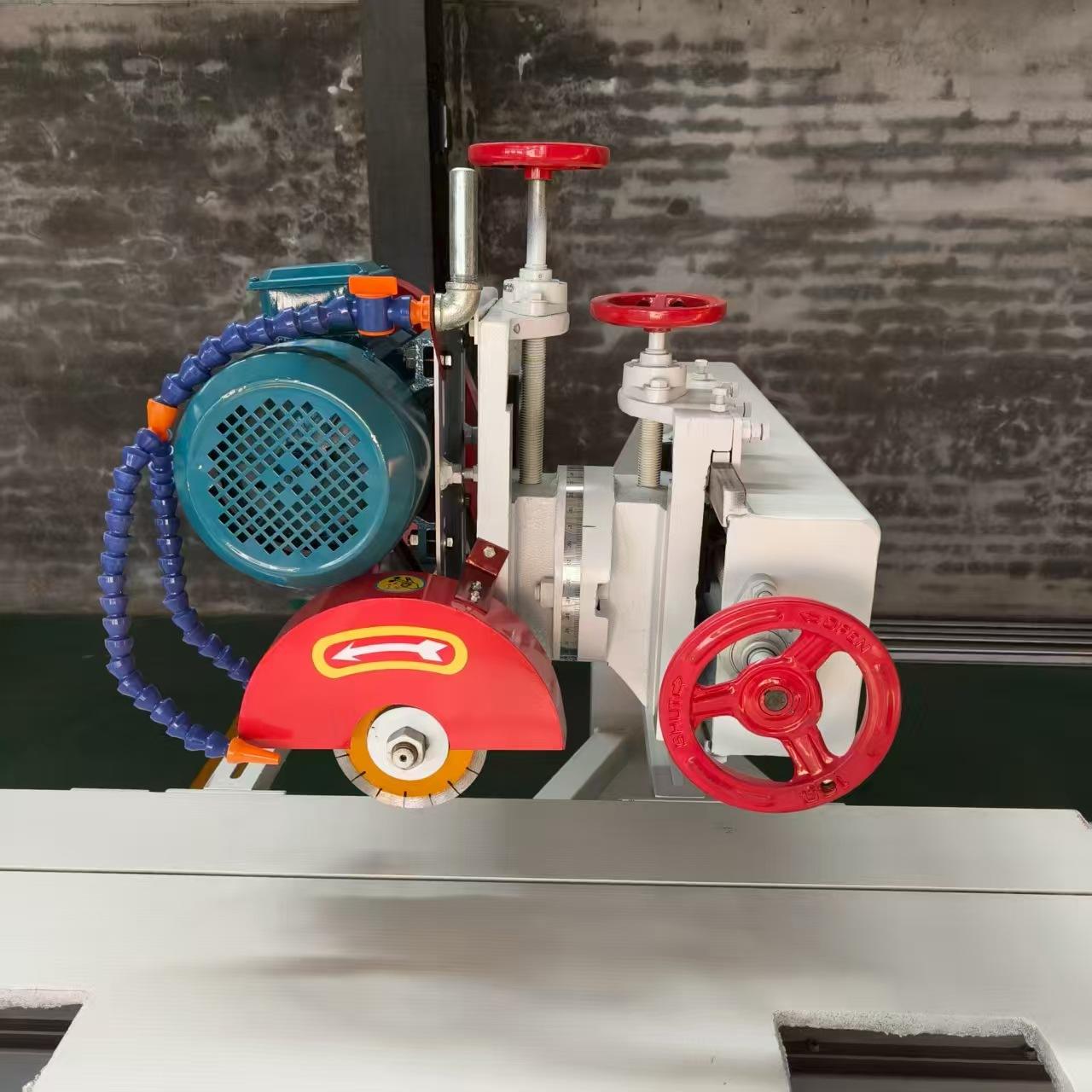
01Inspect the cutting head
Photograph the guard, coolant outlet and mounting area so the supplier can understand the setup.
02Follow the water to the cut
Check nozzle direction and uninterrupted delivery, then inspect filters and slurry removal.
Identify the quartz product accurately
Engineered quartz, natural quartzite and microcrystalline stone are different materials. Record the slab brand or product name, thickness, backing and surface finish. Include the required operation: straight cutting, a narrow strip, a cutout or a miter can need different preparation.
Ask for the current fabrication instructions for that product. Do not borrow a feed value from another slab simply because both are sold as quartz. The existing saw setup is a useful starting record, but it still needs checking when material or thickness changes.
Prepare support, cooling and the cutting path
Support the slab and offcut so neither can move or close on the blade. Check table condition and the planned exit before starting. Follow the slab instructions for openings, corners, pass depth and cut order.
At the cutting head, check water delivery, nozzle position and slurry removal. An operating pump is not enough if the flow misses the working area or filters are obstructed. Keep the blade, guard and electrical system within the machine’s approved wet-cutting arrangement.
Engineered-stone fabrication can produce respirable crystalline silica. Use the site’s exposure controls and follow applicable requirements. NIOSH’s safe-work guidance covers water suppression, ventilation and maintaining control systems.
Read the edge before changing the blade
The location of damage helps decide where to inspect first. Photograph the top and bottom faces at entry, middle and exit, with a scale beside the edge.
Where the chip appears is a useful clue
01Along the edge
Compare both faces. Check blade condition, machine stability, support and the approved feed setting.
02At the exit
Look for offcut movement and a loss of support at the last part of the pass.
| Observed result | Check first | Possible process direction |
|---|---|---|
| Fine chipping along the full cut | Runout, rim condition, feed, support | Restore mechanical stability, verify blade specification, then test feed within approved limits |
| Heavy exit breakout | Offcut movement, table support, exit method | Improve support and verify the slab manufacturer’s recommended finishing method |
| Burn marks or odor | Water delivery, glazing, pressure, RPM | Restore coolant, verify operating speed and inspect segment condition |
| Blade wanders | Core deflection, flanges, alignment, feed | Check mounting and machine rigidity before changing the blade |
| Cutting becomes progressively slower | Glazing, slurry, water nozzles, bond match | Clean the system, inspect the segment and review formulation if the issue returns |
| Segment life is unexpectedly short | Material abrasiveness, feed, cooling, bond | Compare controlled wear data and evaluate a different specification |
Compare the options Tap to expand
Fine chipping along the full cut
- Check first
- Runout, rim condition, feed, support
- Possible process direction
- Restore mechanical stability, verify blade specification, then test feed within approved limits
Heavy exit breakout
- Check first
- Offcut movement, table support, exit method
- Possible process direction
- Improve support and verify the slab manufacturer’s recommended finishing method
Burn marks or odor
- Check first
- Water delivery, glazing, pressure, RPM
- Possible process direction
- Restore coolant, verify operating speed and inspect segment condition
Blade wanders
- Check first
- Core deflection, flanges, alignment, feed
- Possible process direction
- Check mounting and machine rigidity before changing the blade
Cutting becomes progressively slower
- Check first
- Glazing, slurry, water nozzles, bond match
- Possible process direction
- Clean the system, inspect the segment and review formulation if the issue returns
Segment life is unexpectedly short
- Check first
- Material abrasiveness, feed, cooling, bond
- Possible process direction
- Compare controlled wear data and evaluate a different specification
Treat those observations as starting points for inspection. If a blade shows cracks, loose segments or distortion, remove it from service. Do not try to restore the cut by forcing the feed.
Match the blade and machine together
The quartz series offers 300, 350 and 400 mm diameters. Open the specification table to compare the cutting-section dimensions, then confirm the bore, flange and approved operating conditions for your machine.
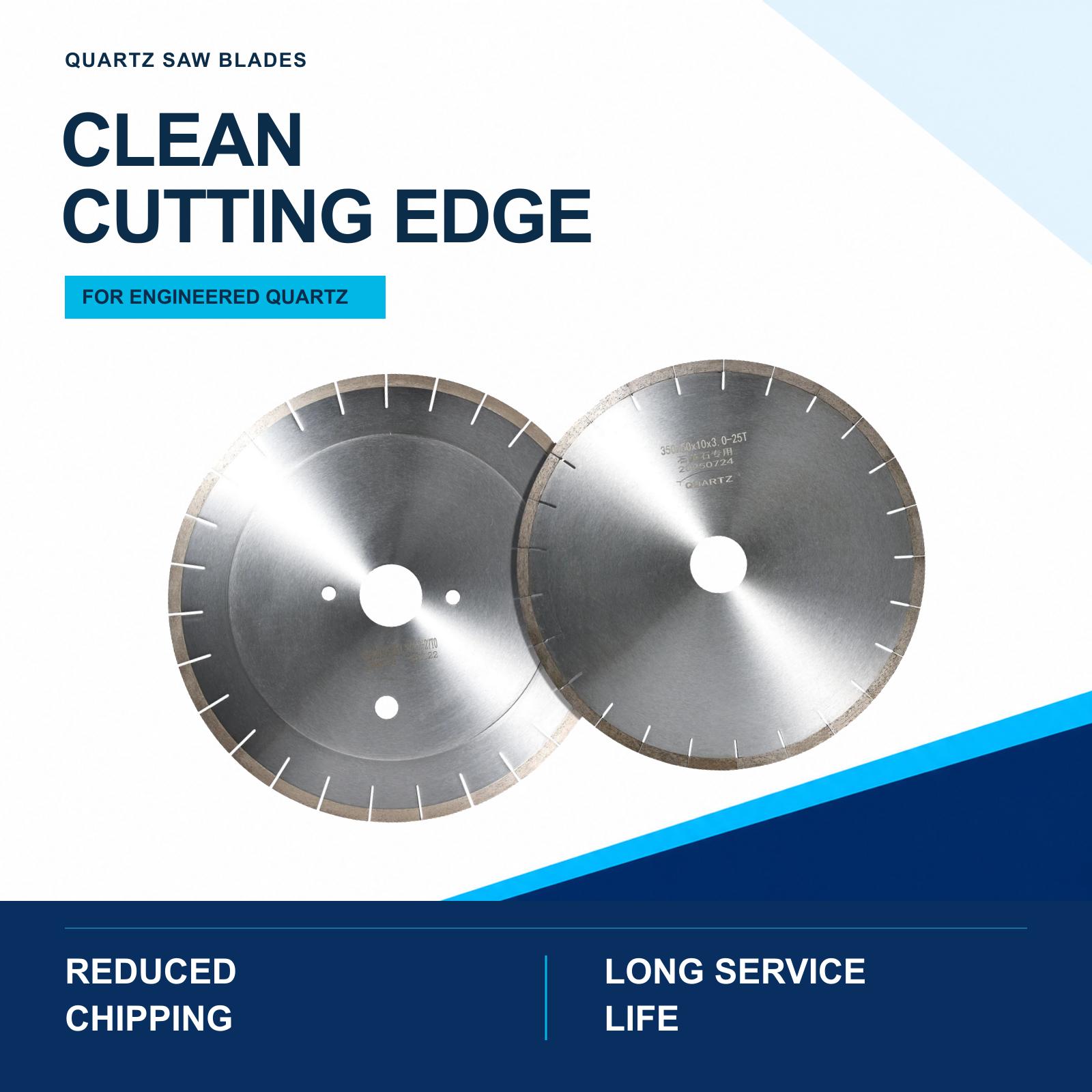
Quartz Saw Blades
Choose by the actual slab composition, not its colour or trade name. The quartz series addresses quartz stone and artificial boards; identify nano or microcrystalline material separately before comparing blades.
View specificationsA 350 mm diameter match only establishes one dimension. If the bore, mounting arrangement or speed limits differ, the blade is not ready for installation. For more detail, use the machine compatibility guide.
Make the first comparison useful
Choose a representative offcut from the actual slab batch. Record the blade identity, material thickness, machine settings, coolant arrangement and support method. Agree what counts as an acceptable edge before comparing time or price.
Keep the first satisfactory sample as a reference. If the cut deteriorates later, compare the current setup with that record and note any changes in the slab, tool condition or water system. When requesting help, send those details together with full-edge and close-up photographs.
FAQ
Is engineered quartz the same as quartzite?
No. Engineered quartz is a manufactured slab containing mineral material and a binder. Quartzite is natural stone, so the two should be identified separately in a blade enquiry.
Which diamond blade rim gives the least chipping on engineered quartz?
There is no universal rim. Edge-focused configurations still need to be matched to slab composition, thickness, machine power, coolant delivery and required edge quality.
Why does a quartz cutting blade burn?
Possible causes include inadequate coolant, glazing, excessive pressure, incorrect RPM, unstable cutting or an unsuitable blade specification.
Can the same blade cut engineered quartz and quartzite?
A multi-material blade may be available, but the materials behave differently. High-volume or edge-critical work should be evaluated separately.