
A miter route requires a defined bevel position and machine setup.
APPLICATION SOLUTION · EDGE PROCESSING
Sintered Stone Chamfering & Mitering
For a sintered stone miter, define the angle and finished joint first. Review the incoming cut, front and rear wheel positions, mounting dimensions and finishing requirement as one process.

Material scope
Sintered stone panels45-degree edge applications
Processing focus
Bevel preparation45-degree chamferingBevel grindingSplicing preparation
Equipment context
Automatic sintered stone bevelerTable-type sintered stone bevelerCNC sintered stone processing center
BUYER CONTEXT
Plan the miter
in clear stages.
A useful mitering brief names the bevel position, the machine and the required edge stage. This makes it easier to separate initial removal from later edge refinement and connect each stage to the relevant tool series.
Rough preparation and refined edge work are different process stages.
The joint requirement should be identified before choosing the tool sequence.
PROCESSING ROUTE
Build the selection
around the actual job.
- 01
Set the 45-degree requirement
Define the bevel angle and edge position before selecting the process route.
- 02
Plan rough and fine stages
Use a staged approach where the initial material-removal step and finish requirement are discussed separately.
- 03
Match the wheel series
Review the metal-bond and resin-bond sintered-stone chamfering wheel options in the related product series.
RECOMMENDED TOOL ROUTE
Tool stages for
this processing job.
Start from the stage you need to complete. The linked product series lets you review the available configurations once the material and machine are confirmed.
What to compare before choosing
| Product series | Selection considerations |
|---|---|
| Sintered Stone Chamfering Wheels | The metal-bond options use the front position and the resin-bond options the rear position. Confirm the 45° beveling setup, 12 mm bore and working section for the selected diameter. |
| Sintered Stone (Dekton) Saw Blades | Specify straight cutting, 45° bevel cutting or grooving before choosing the blade. For a miter, include slab thickness and the required joint edge so the blade and subsequent finishing steps can be reviewed together. |
Sintered Stone Chamfering Wheels
The metal-bond options use the front position and the resin-bond options the rear position. Confirm the 45° beveling setup, 12 mm bore and working section for the selected diameter.
View specificationsSintered Stone (Dekton) Saw Blades
Specify straight cutting, 45° bevel cutting or grooving before choosing the blade. For a miter, include slab thickness and the required joint edge so the blade and subsequent finishing steps can be reviewed together.
View specifications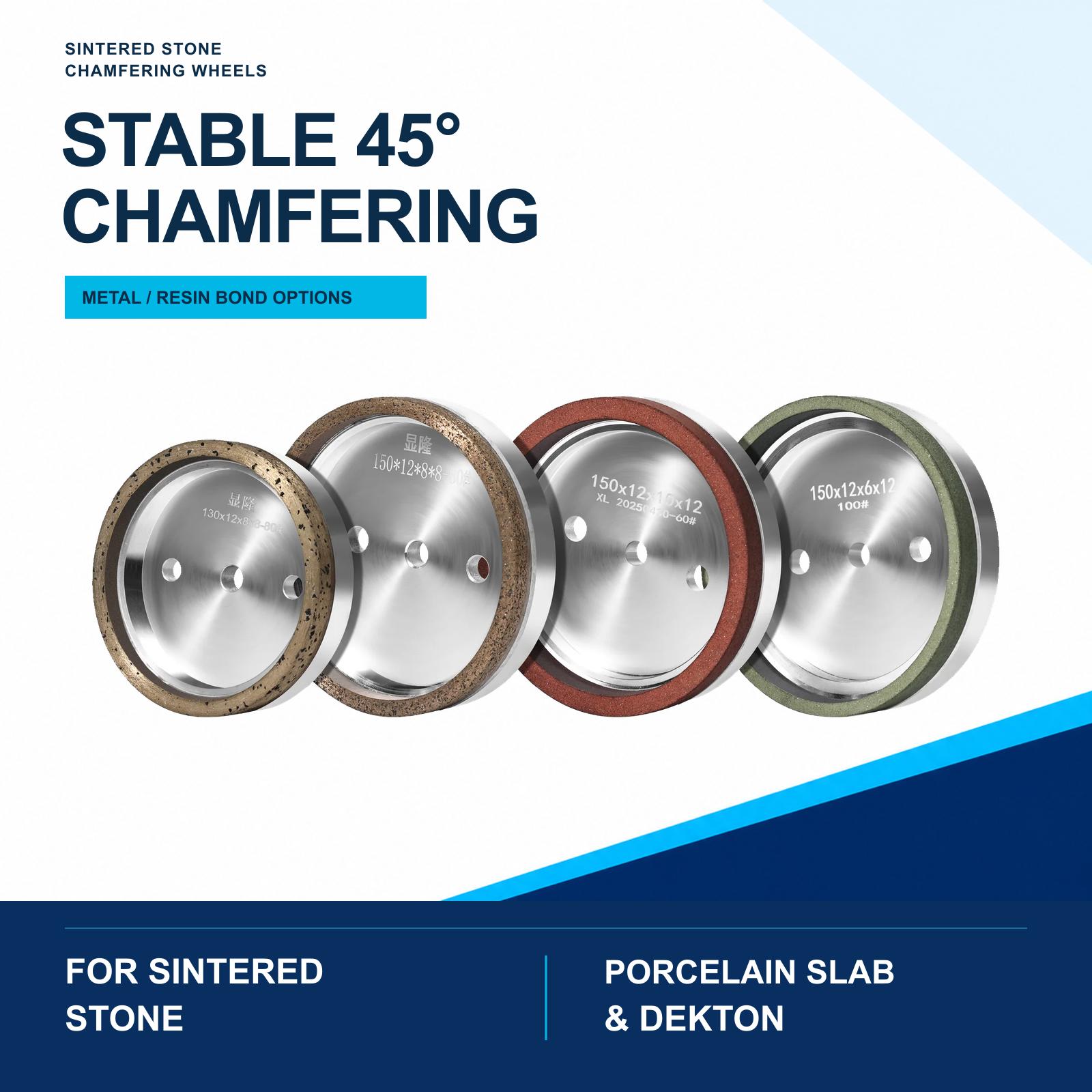
Bevel-processing series
Sintered Stone Chamfering Wheels
Metal-bond and resin-bond wheels for sintered-stone beveling and bevel grinding.
View product series ↗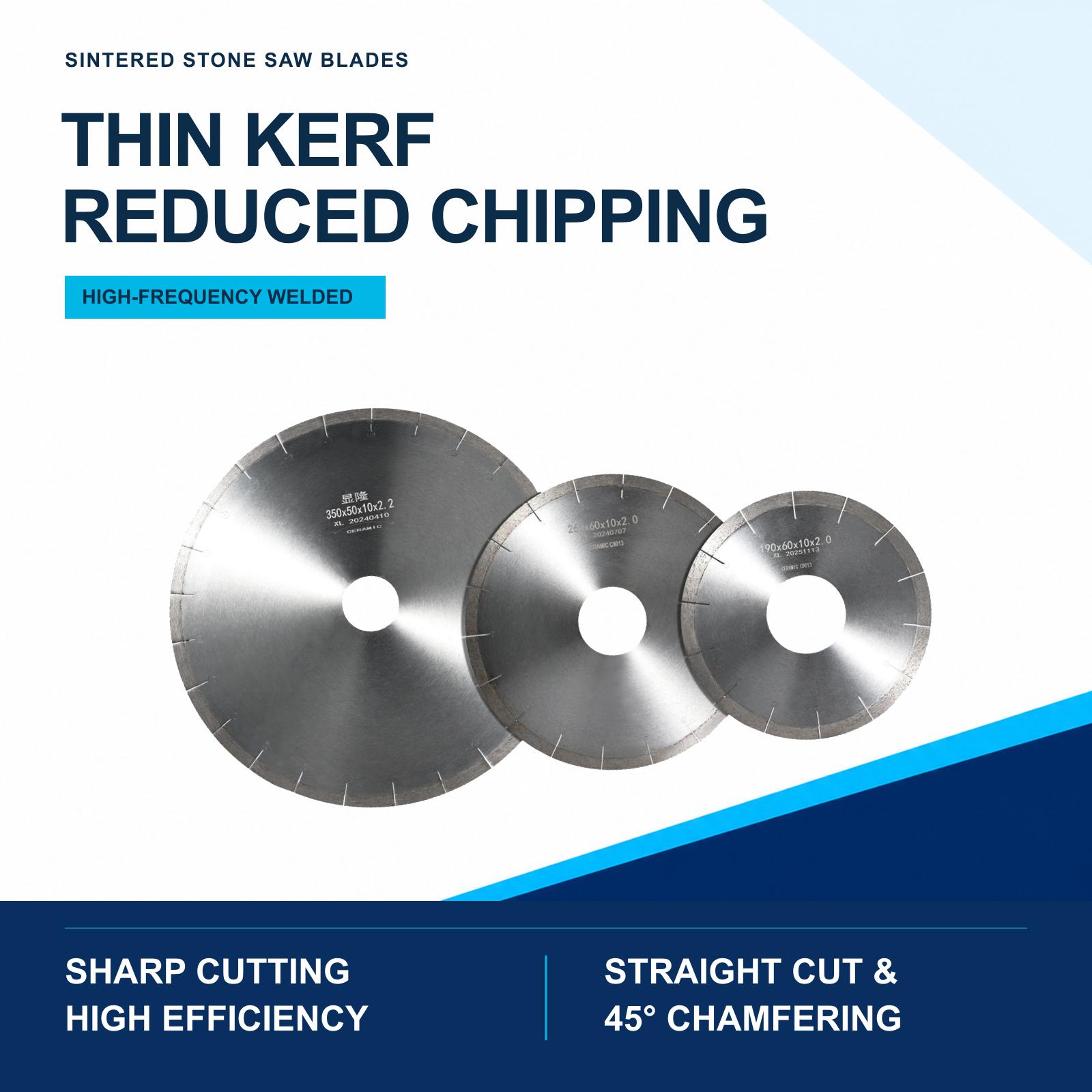
Cut-edge preparation
Sintered Stone (Dekton) Saw Blades
For projects that begin with sintered-stone straight or 45-degree cutting before edge processing.
View product series ↗SELECTION LOGIC
Confirm the project
before the quote.
Required edge
Specify the 45-degree bevel or miter requirement and the edge position involved.
Process stage
Separate the initial bevel preparation from the later refining step.
Machine route
State whether the operation is on a dedicated beveler, bridge cutter or CNC processing center.
Splicing objective
If the edge supports a joint, include the intended splicing process in the product discussion.
CUSTOM & OEM PROJECTS
Custom & OEM
support.
Custom and OEM requests can be reviewed around your material, processing operation, machine and project-specific requirements.
01Panel type
02Required bevel or miter operation
03Machine model or process route
04Required joint or edge result
APPLICATION FAQ
Buyer FAQs,
answered.
- 01What should be defined for a sintered stone miter?
- Provide the panel type, 45-degree bevel requirement, machine and the intended edge or joint result. These details help distinguish the edge stages that need to be discussed.
- 02Can rough and refining stages be planned together?
- Yes. Describe the complete miter route, while keeping initial bevel preparation and the required final edge stage clear.